
Funded In Stages
Capital released against construction progress.
Ground-up construction
Capital for building from land or plans through to a completed asset.
Offered Term Sheet within 12-24 hours
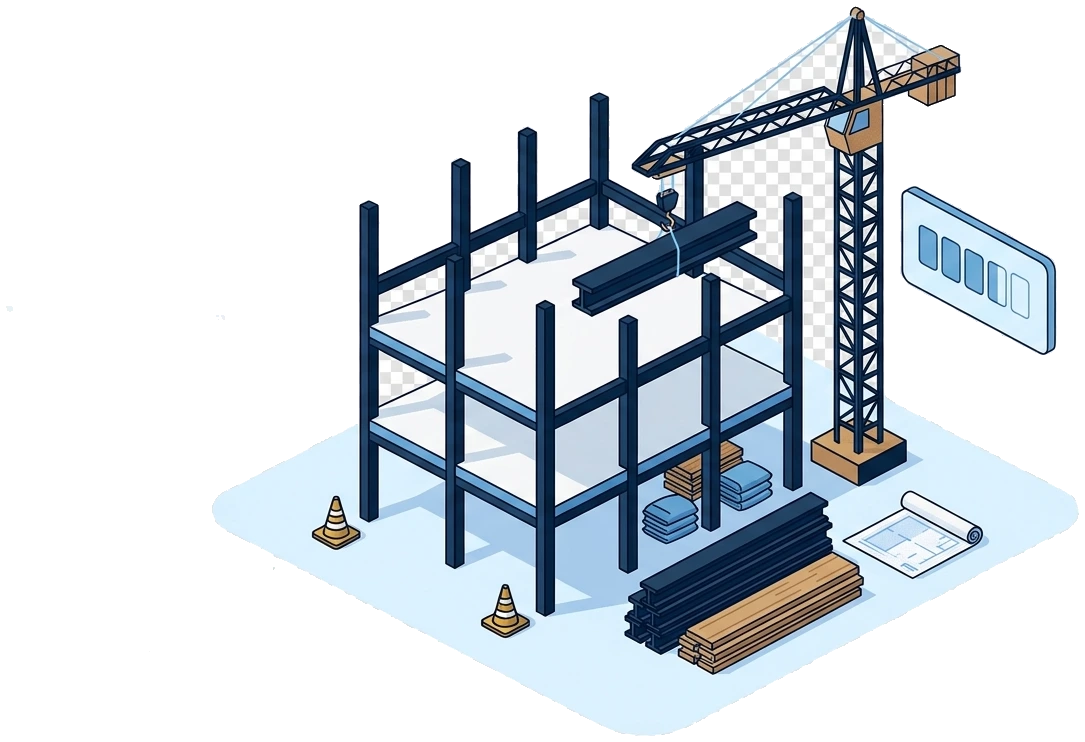
Ground-up construction financing funds the build as it happens. Land or lot cost, the construction budget and the finished value are assessed together, and money is released against progress rather than in one lump. Because construction carries execution risk, the sponsor's track record matters as much as the project itself.
A new construction loan is a short-term hard money loan for building a property from the ground up, on a vacant lot or after a teardown. Unlike a purchase loan, most of the money is not spent on day one. It is released in stages as the building goes up.
Apex funds up to 100% of the construction budget, released in draws against progress. The lot can already be yours, or its purchase can be included in the financing, with the lot cost and the build assessed together. The loan is repaid when the finished property is sold or refinanced into long-term financing.
Building carries more risk than renovating. Weather, permits, inspections, material prices and subcontractor schedules can all move the timeline. That is why the sponsor's record of finished projects matters as much as the project itself, why approved plans are required before closing, and why a licensed general contractor is typically required.
Line up the lot, the approved plans and a detailed construction budget, ideally broken out line by line by your general contractor.
Share the lot details, plans, budget and expected value of the finished property, along with your completed projects. A term sheet comes within 12 to 24 hours.
The lot, the budget and the finished value are assessed together. Your track record, credit and contractor are reviewed.
Approved plans are required before closing. Permits do not have to be in hand to close, but they must be before the first draw.
The budget becomes a schedule of values. Funds are released as stages are finished and inspected, often at foundation, framing, dry-in, mechanical rough-in, finishes and certificate of occupancy.
Once the certificate of occupancy is issued, the property is sold or refinanced, for example into a DSCR rental loan if you keep it as a rental, and the hard money construction loan is paid off.
If the building is already standing and needs work, a fix and flip loan is usually the better tool, with up to 100% of the rehab budget funded through draws.
Track record carries real weight on construction files. If you have not built before, completing renovation projects first builds the history that ground-up lending looks for.
These are business-purpose loans for investment property, not for building a home you will live in.
Every construction file is reviewed by a person. These are the parts of a ground-up deal that carry the most weight.
Capital released against construction progress.
Lot cost and construction budget assessed as one.
Your completed projects form part of the picture.
The land does not have to be owned free and clear. Lot acquisition can be included in the financing, with the lot cost and the build assessed together.
Approved plans are required before closing. Permits are not required to close, but they must be in hand before the first draw is released.
A licensed general contractor is typically required.
Construction money is not advanced in a lump sum. The budget is broken into a schedule of values, and funds are released in stages as the work is finished and inspected, typically at foundation, framing, dry-in, mechanical rough-in, finishes and certificate of occupancy.
That is how construction lending works generally; the draw count and inspection arrangements on your own file are set deal by deal.
The lot is assumed to be owned outright to keep the math simple. Draw stages and amounts on a real file are set deal by deal and shown on your term sheet.
Draws reimburse finished, inspected work, so the builder needs cash or credit to carry each stage until its inspection clears. Permits must be in hand before Draw 1 is released.
The $150,000 between total cost and finished value is not profit. Interest, points, closing and selling costs, insurance, taxes and any overruns come out of it. A contingency line in the budget is the usual protection against overruns.
All financing programs, rates, leverage, terms, and closing timelines are subject to lender guidelines, underwriting approval, property eligibility, satisfactory due diligence, and borrower qualifications. A preliminary review or quote is not a commitment to lend.
Investor construction loans like this one are short-term hard money or private money loans. They are based on the lot, the budget, the finished value and the builder, and they are repaid by a sale or a refinance when the build is done. They are different from a bank's construction loan for a home you will live in.
Up to 100% of the construction budget, released in stages against progress. Lot acquisition can also be included, with the lot cost and the build assessed together. The term sheet sets out the exact amounts for your project.
No. The land can be owned outright or financed as part of the loan. If you are buying the lot, send the purchase contract with the plans and budget so the lot and the build can be assessed together.
Approved plans are required before closing. Permits are not required to close, but they must be in hand before the first draw is released.
The budget is broken into a schedule of values. Funds are released as each stage is finished and inspected, typically at foundation, framing, dry-in, mechanical rough-in, finishes and certificate of occupancy. The draw count and inspection arrangements on your file are set deal by deal.
Your track record matters as much as the project. Completed projects count toward approval, and a licensed general contractor is typically required. If your experience is limited, send the deal anyway and we will tell you plainly how it looks.
Rates depend on the project, the leverage and your experience, and they are set deal by deal. A term sheet with the numbers comes within 12 to 24 hours of receiving the plans and budget.
No. These are business-purpose loans for investment property, such as homes built to sell or to rent.
Application
The more detail you give, the faster we can come back with something useful. Everything is reviewed by a person.
We offer new construction financing in every state below. Each state page covers the main investor cities, local rules worth knowing and how this loan fits there.
Financing for buying, renovating and exiting a property inside a defined timeline.
Explore 02Financing for stabilized rental property, assessed on what the asset earns.
Explore 03Short-term capital to hold a position while the longer-term plan comes together.
Explore