Capital-focusedRelationship-firstBuilt for execution

Where we finance

Hard Money Loans in North Carolina

Apex Capital Advisors arranges hard money and other business-purpose financing for investors across North Carolina, from Charlotte mill houses to Raleigh new builds. We offer fix and flip, DSCR rental, bridge and new construction loans, with a term sheet within 12 to 24 hours.

The lay of the land

Investing in North Carolina

North Carolina runs from the mountains through the Piedmont to the coast. The Piedmont holds Charlotte, a banking center anchored by Bank of America and Truist; the Research Triangle of Raleigh, Durham and Chapel Hill, built around its universities and Research Triangle Park; and the Triad of Greensboro, Winston-Salem and High Point, with roots in textiles, tobacco and furniture. Its mill houses, bungalows and postwar brick ranches are the state's core rehab stock.

On the coastal plain, Fayetteville sits beside Fort Bragg and Jacksonville beside Camp Lejeune, where military households keep rentals in demand. From Wilmington to the Outer Banks, beach houses often run as vacation rentals. In the mountains around Asheville and Boone, Hurricane Helene's flooding made flood maps and storm damage part of every deal.

For hard money buyers, red clay soil, damp crawl spaces and termites are common problems to price in in older North Carolina houses, and coastal property carries hurricane and flood exposure.

Loan programs

Loan Programs in North Carolina

Four ways to finance an investment property in North Carolina, each sized to the deal rather than a fixed product.

01

Short-term project capital

Fix and Flip Loans in North Carolina

North Carolina flips usually start with an older house: a mill house in NoDa or East Durham, a bungalow near downtown Greensboro, or a postwar brick ranch in east Charlotte. They often need a roof, wiring, HVAC or crawl space work besides new finishes, so check for termites and moisture before budgeting.

Our hard money fix and flip loans fund up to 92.50% of total cost and up to 100% of the rehab budget, paid in draws after third-party inspections. First-time investors are welcome. The minimum FICO is 650, with lower scores considered case by case.

  • Newbies are welcome
  • Up to 92.50% Loan to Cost (LTC)
  • Up to 100% of rehab budget
Fix and flip loan details
02

Long-term rental financing

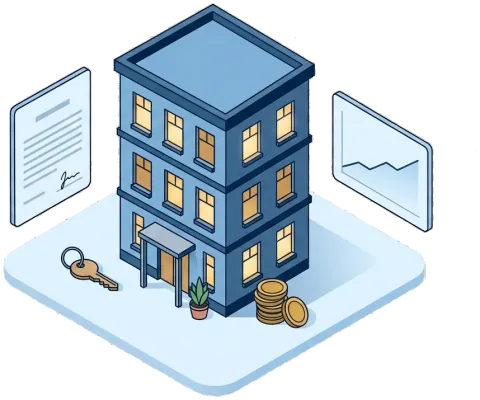
DSCR Rental Loans in North Carolina

North Carolina rentals include suburban houses around Charlotte and the Triangle, homes leased to military families near Fort Bragg and Camp Lejeune, student rentals near NC State, UNC Greensboro and East Carolina University, and beach and mountain vacation rentals.

Our DSCR loans qualify on the property's cash flow, with no personal-income verification. Loan amounts run from $100K to $3M+, with 30-year fixed and ARM options, ratios as low as 0.75x and cash-out refinances up to 80% LTV. Reaching the full 80% takes a stronger DSCR and credit score than the program minimums, so leverage on each file is set by its DSCR and credit. A renovation can raise assessed value even between county reappraisals, so estimate taxes on the finished house.

  • Qualified on the property's cash flow, not your personal income
  • No traditional employment or personal-income verification
  • Cash-out refinance LTV up to 80%
DSCR rental loan details
03

Interim financing

Bridge Loans in North Carolina

In North Carolina, a bridge loan covers the time between a fast purchase and the long-term plan. A Charlotte investor may need to close on the next house before the last one sells. A Greensboro or Durham buyer may take on a vacant duplex or small apartment building that needs repairs and tenants before a long-term lender will consider it. On the coast and in the mountains, a storm-damaged house may need repairs before permanent financing.

Attorneys handle North Carolina closings, so book the closing attorney early when the purchase has to move fast. A sale or a DSCR loan pays the bridge off.

  • Structured for transactions that cannot wait
  • Property in transition, lease-up or repositioning
  • Terms set deal by deal rather than to a fixed product
Bridge loan details
04

Ground-up construction

New Construction Loans in North Carolina

North Carolina investors build spec homes in the suburban counties around Charlotte and Raleigh, infill houses on teardown lots in older neighborhoods, and raised homes near Wilmington and the beaches.

Our new construction loans fund up to 100% of the construction budget, assess the lot and build together, and release money in stages against progress. Approved plans are needed before closing. Builds above the state's cost threshold need a licensed general contractor and a lien agent named at permitting. Coastal sites in an Area of Environmental Concern also need a CAMA permit.

  • Up to 100% of the construction budget
  • Land or lot cost and build budget assessed together
  • Capital released in stages against construction progress
New construction loan details

Program terms are general guidelines, not a quote or commitment. Every loan is subject to underwriting and approval and is for business purposes only.

Local markets

Where We Finance in North Carolina

Apex offers loans statewide. These markets are a starting point, not a limit.

Charlotte

Charlotte is a banking center, home to Bank of America, Truist and Duke Energy, with an American Airlines hub at Charlotte Douglas. NoDa grew up around textile mills and still has mill houses that suit full rehabs, as do older houses in Optimist Park and Villa Heights. Plaza Midwood and Dilworth have early bungalows where buyers expect a finished product, while postwar ranch streets in east and west Charlotte suit a hard money rehab followed by a rental refinance. The LYNX Blue Line runs through uptown to UNC Charlotte, where student rentals are common.

Raleigh

Raleigh is the state capital and home to NC State University, with Research Triangle Park a short drive west. Inside the Beltline, Oakwood has Victorian houses in a historic district, and Boylan Heights, Glenwood-Brooklyn and Mordecai have early bungalows and cottages, where small houses on good lots are often replaced. The city's missing middle zoning changes allow duplexes and townhouses in districts once limited to single-family homes, widening infill options. Southeast Raleigh has postwar ranch houses that suit straightforward rehabs, and Cary, Garner and Wake Forest add newer subdivisions for rentals.

Greensboro

Greensboro anchors the Piedmont Triad, between Charlotte and the Triangle. NC A&T State University and UNC Greensboro sit near downtown, Cone Health is a major employer, and Volvo's North American truck business and Honda Aircraft are based here. Toyota's battery plant in nearby Liberty and Boom Supersonic's factory at Piedmont Triad International Airport add manufacturing jobs. The old Cone mill villages in northeast Greensboro still hold small frame mill houses, Fisher Park and College Hill have older homes near downtown and UNCG, and postwar ranch neighborhoods suit rentals headed for a DSCR refinance.

Durham

Durham is anchored by Duke University and Duke Health, with NC Central University in the city and Research Triangle Park to the southeast. The city was built on tobacco, and the American Tobacco Campus and Brightleaf Square are old tobacco buildings turned into offices, shops and restaurants. Trinity Park and Walltown sit beside Duke's East Campus with bungalows and foursquares, Old West Durham grew around a cotton mill, and East Durham has mill houses that suit full rehabs. Rentals near Duke and its hospital draw graduate students, nurses and other hospital staff.

Before you buy

What Investors Should Know About North Carolina

01

Foreclosure goes before the clerk

North Carolina lenders usually take a deed of trust with a power of sale. Before the trustee sells, the clerk of superior court holds a hearing and must find a valid debt, a default, the right to foreclose and proper notice, and that no home-loan or military protections bar the sale. After the sale, anyone can file an upset bid with a deposit, and each new bid reopens the window.

02

Attorneys handle title and closings

The North Carolina State Bar treats title opinions and the legal side of a residential closing as the practice of law. A nonlawyer may present documents, show where to sign and handle funds, but may not give a title opinion, draft documents for a party or give legal advice. Plan on a North Carolina attorney for every purchase closing.

03

Landlord duties and deposits

A North Carolina landlord must follow current building and housing codes, keep the rental fit and habitable, and provide working smoke alarms and, where required, carbon monoxide alarms. Deposits are capped by tenancy length and must be held in a trust account at a licensed, federally insured institution or covered by an insurance bond. Evictions go through the courts.

04

Lien agents on rehab and building jobs

On North Carolina improvement projects above a set cost, the owner must designate a lien agent when the building permit is issued. Owner-occupied single-family homes are exempt; investor rehabs and new builds are not. Contractors and suppliers notify the lien agent to protect their lien rights. Collect lien waivers with every draw.

General information, not legal or tax advice. Laws and rates change; confirm the details with a licensed attorney or tax professional in North Carolina.

Questions

North Carolina Hard Money Loan FAQs

Not answered here? Call +1(551) 321-5995 or read the full FAQ.

Do you offer hard money loans to first-time flippers in North Carolina?

Yes. First-time investors are welcome, with up to 92.50% of total cost and up to 100% of the rehab budget financed. Minimum FICO is 650, with lower scores considered case by case. Term sheets come within 12 to 24 hours, and qualified deals with complete documents can fund in as fast as 15 days.

Who pays North Carolina's excise tax when a property sells?

The seller. North Carolina's excise tax on deeds falls on the transferor by statute, and the county register of deeds collects it before recording. On a flip, you skip it when you buy and pay it when you sell, so include it in your exit budget.

Does North Carolina have rent control?

No. State law bars cities and counties from regulating rent on privately owned residential or commercial rental property. Landlord duties still apply: the home must be fit and habitable, deposits are capped and held in trust or bonded, and an eviction goes through a summary ejectment case, not self-help.

Can I get a DSCR loan on a beach or mountain vacation rental?

Yes. Short-term and long-term rentals are both eligible, with income supported by AirDNA data, operating history or appraiser-supported short-term rental comparables, depending on the program. North Carolina's Vacation Rental Act requires a written agreement for vacation stays and allows expedited eviction when a short-stay guest holds over or fails to pay.

Do I need a licensed general contractor to build in North Carolina?

Above the state's cost threshold, yes: the builder must be licensed by the North Carolina Licensing Board for General Contractors. An owner building for their own family can be exempt, but the law presumes otherwise if the family does not live there for a set period after completion. Our construction loans typically require one too.

Beyond the state line

Nearby States We Serve

Investing on both sides of the border? The same programs and the same team cover the states around North Carolina.

All 36 states and Washington, D.C.

Next step

Financing a Property in North Carolina?

Send us the property, the plan and the timeline. We will tell you what is realistic and what we need to issue a term sheet.